Selected projects
Font Del Cat. Language Course. Universitat Autonoma de Barcelona
This innovative online language course, co-developed by Lozano and other team researchers from the University of Barcelona, is aimed at accelerating the acquisition of Catalan by leveraging learners’ prior is knowledge of other Romance languages. The course wis designed around a contrastive and comparative methodology, systematically highlighting lexical, grammatical, and phonological similarities and differences between Catalan, Spanish, French, Italian, and Portuguese. By explicitly fostering cross-linguistic awareness and transfer strategies, the content enabled learners to recognize familiar patterns, reduce cognitive load, and achieve faster comprehension and communicative competence. The project combined pedagogical design with applied linguistics principles to create an accessible, learner-centered digital resource tailored to a multilingual academic context.
“The Different Types of pronoun “Se” in Spanish as a Foreign Language”
This study examines the variety and complexity of the Spanish pronoun “se,” offering practical guidance for teachers in presenting and applying its different uses in the classroom. The work proposes a methodology that begins with learners’ communicative needs, guiding them to recognize, distinguish, and contrast these linguistic forms from both communicative and reflective perspectives.
Designed for Spanish language teachers and scholars, the study emphasizes the importance of understanding grammatical functioning to support effective teaching, correct errors, foster learner reasoning, and enhance students’ comprehension of the language in meaningful communicative contexts.
redELE: Revista Electrónica de Didáctica ELE, ISSN-e 1571-4667, No. 3, 2005
Didactic materials for Centro Virtual Cervantes, the online virtual platform of Instituto Cervantes, 2005-2015
Didactic activities designed by Dr. Lozano to encourage self-assessment, pedagogical reflection, and the development of new instructional strategies, as well as techniques to improve teaching practice, offering practical methods, classroom tips, and innovative approaches to enhance student engagement and learning outcomes.”
“From Descriptive Grammar to Pedagogical Grammar: A Review of Two Works and a Teaching Proposal for the Spanish Subjunctive” - University of Barcelona, Department of Spanish, 2007
Dr. Lozano critically examines two grammar works, analyzing their treatment of Spanish grammar for instructional purposes. Drawing on her experience teaching at Princeton University, she presents a didactic proposal aimed at facilitating learners’ conceptual understanding of the subjunctive mood in Spanish as a foreign language. The research emphasizes bridging descriptive grammar and pedagogical methodology to enhance the effectiveness of language instruction.
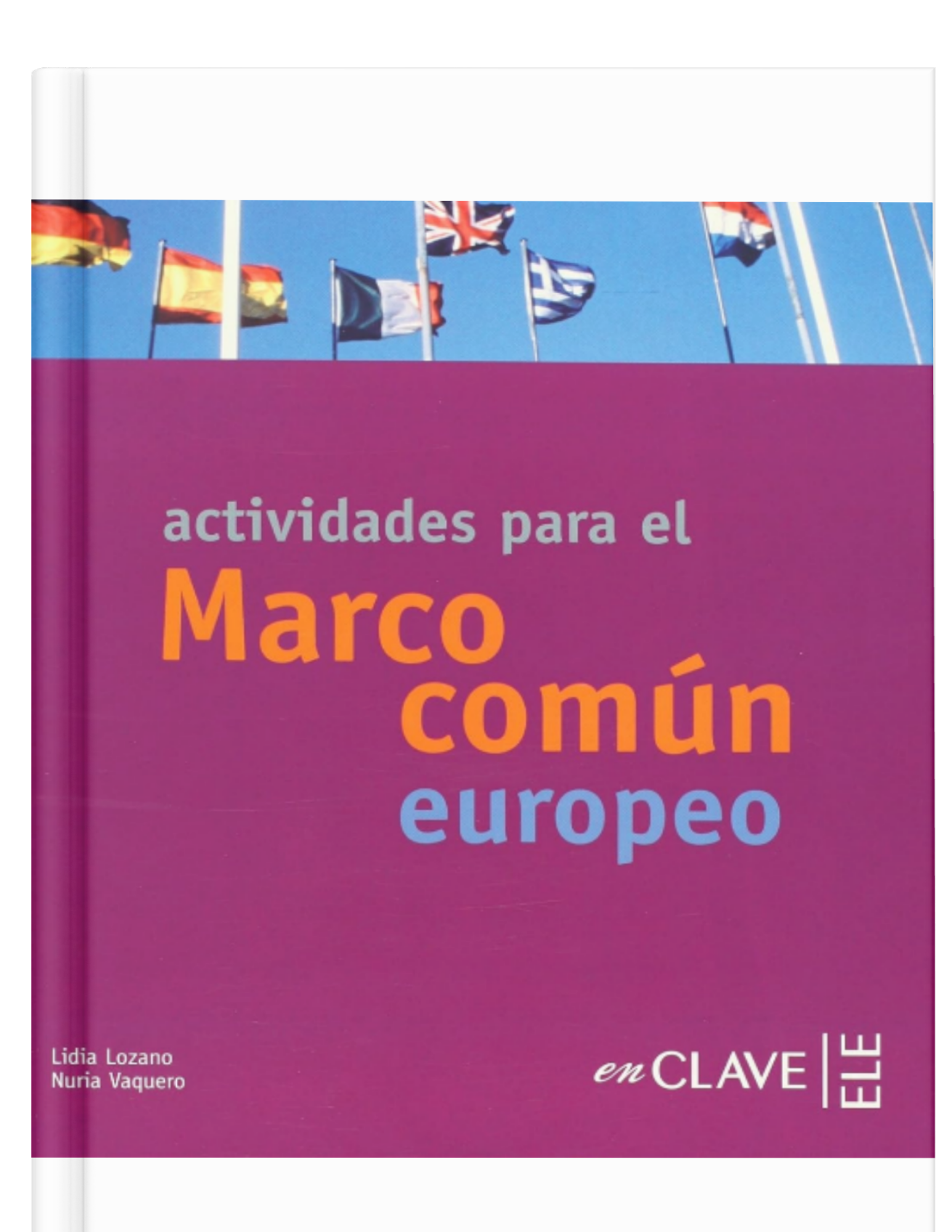
Textbook. Activities for the Common European Framework B1 + CD (Spanish Edition)
The Activities for the Common European Framework B1 book provides a comprehensive collection of exercises aimed at developing oral and written skills at the B1 level of the Common European Framework of Reference level. The book features a variety of practical and communicative activities that allow learners to apply Spanish in realistic contexts, promoting both accuracy and fluency. In addition, the book incorporates tools for self-assessment and reflective learning, enabling students to monitor their progress while steadily building confidence and competence in intermediate-level Spanish.
Lozano, L., & Vaquero Ibarra, N. (2010). Activities for the Common European Framework B1 + CD (Spanish Edition). Enclave.
“Towards a unified explanation of the subjunctive in Spanish as a foreign language”, Cuadernos Cervantes de la Lengua Española, 2005
Dr. Lozano seeks to provide a unified explanation of the Spanish subjunctive to support its teaching and comprehension in Spanish as a foreign language. Rather than presenting multiple isolated rules, it proposes a key underlying rule that can encompass all cases of subjunctive use, aiming to simplify how the mood is introduced to learners and explained in the classroom.
Lozano González, L. (2005a). Towards a unified explanation of the subjunctive in Spanish as a foreign language: Part 1 – No indicative-subjunctive alternation. Cuadernos Cervantes de la Lengua Española, 56, 24–33.
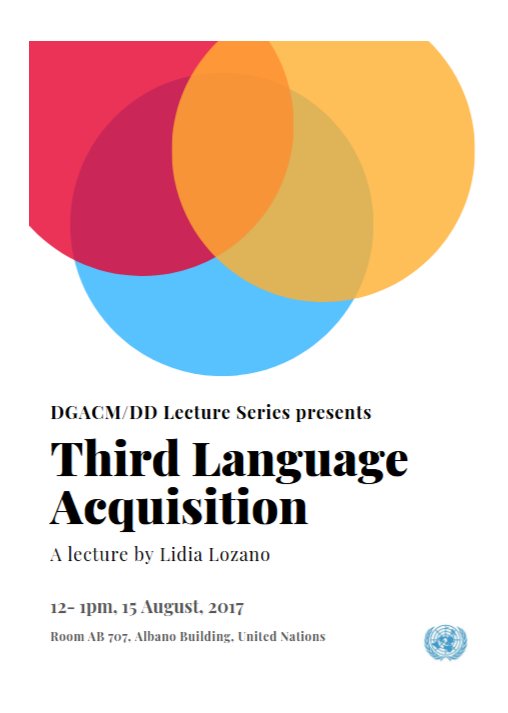
“Third and Additional Language Acquisition”. Doctoral Thesis – University of Barcelona, Department of Spanish Philology, 2012
Dr. Lozano investigates third and additional language acquisition, combining theoretical insights with fifteen years of teaching experience. Drawing on her work with multilingual teams at the United Nations, she conducts an empirical study evaluating multilingual speakers’ ability to understand a language unknown to them, highlighting the role of prior language knowledge in learning new ones. Her research integrates sociolinguistic, psycholinguistic, and pedagogical perspectives to provide a comprehensive view of multilingual language learning.